Written by: Erin Vaughan - President, CEO and Journeyperson Automotive Service Technician
5 Common Vehicle Problems Saskatchewan Winters Can Make Worse
Winter doesn't usually cause vehicle problems, it simply exposes problems that were already developing.
During warmer weather, some concerns are easy to put off: a small fluid leak, a clunk over bumps, a heater that doesn't work quite as well as it used to or a battery that was starting to crank the engine over a little slower. Unfortunately, Saskatchewan winters have a way of making small problems more noticeable, more expensive and much more inconvenient.
At Kinetic Auto Service in Regina, we believe that understanding your vehicle's condition before something fails is one of the best ways to avoid unexpected breakdowns.
Here are five vehicle concerns that deserve attention as temperatures drop:
1. Worn Spark Plugs
Every Saskatchewan winter, vehicles arrive at Kinetic on tow trucks because they won't start. Dead batteries are a common culprit, and that makes sense. Cold temperatures reduce a battery's ability to deliver power, while the engine generally requires more power to turn over, but there's another cause we see that surprises people: worn out spark plugs!
Here's what's interesting: the vehicle may have been starting perfectly fine throughout the summer and fall, then once the temperature drops, the engine cranks but refuses to start, and suddenly the vehicle needs a tow.
So why does this happen?
Spark plugs create the electrical spark that ignites the air/fuel mixture inside your engine. As spark plugs wear, their electrodes gradually deteriorate and the gap the spark must jump increases. That means the ignition system needs to produce more voltage to fire the plug.
Now introduce Saskatchewan winter temperatures! Cold fuel doesn't vaporize as readily, cold engine surfaces make combustion more challenging, and battery voltage can drop during cranking. An ignition system that could reliably fire those worn spark plugs in warmer weather may no longer be able to do so under these more demanding conditions. The cold weather didn't necessarily cause the problem. It exposed a maintenance issue that was already developing.
Spark plugs have recommended replacement intervals. They're not intended to last forever, but because they often don't cause noticeable symptoms until they're badly worn, they're easy to forget. Replacing spark plugs when they're due is usually far less disruptive than dealing with a breakdown and an unexpected tow.
Of course, not every crank/no-start problem is caused by spark plugs. Proper diagnosis is still essential when a vehicle won't start.
2. Cooling System Problems
Your engine's cooling system is just as important in January as it is in July. While we usually associate cooling systems with preventing overheating, coolant also protects your engine from freezing and helps provide heat inside your vehicle.
Problems such as low coolant levels, leaking hoses, deteriorated coolant or a malfunctioning thermostat can become particularly troublesome during extreme temperatures.
Warning signs to watch for:
- Your heater isn't producing as much heat as it used to.
- You're frequently topping up coolant.
- You notice a sweet smell around your vehicle.
- There are puddles underneath your vehicle.
- Your temperature gauge is behaving unusually.
A small cooling system problem can become a much bigger concern if ignored.
3. Fluid Leaks That Seem Minor
A few drops of fluid on the driveway might not seem like a big deal, but your vehicle depends on several different fluids to lubricate components, control temperatures and operate critical systems.
Engine oil, transmission fluid, differential fluid, power steering fluid (where applicable) and coolant all serve important purposes. Cold weather can change how seals and components behave, often making small leaks much bigger. More importantly, a leak that causes fluid levels to drop can lead to accelerated wear or component damage.
Not every leak is an emergency, but every leak deserves to be identified so you understand its severity.
4. Suspension and Steering Problems
Saskatchewan roads can be tough on vehicles, especially through the freeze/thaw cycles that create potholes and uneven road surfaces. Worn suspension and steering components may become more noticeable when roads are rough or slippery and when the temperature drops.
You might notice:
- Clunking or rattling over bumps
- A vehicle that wanders or pulls
- Uneven tire wear
- Excessive bouncing
- Steering that feels loose or unusual
These symptoms can have several causes, so proper inspection and diagnosis are important. Your steering, suspension and tires all contribute to how your vehicle handles. When winter driving conditions reduce traction, maintaining these systems becomes especially important.
5. Batteries: Cold Weather's Most Common Casualty
Your vehicle's battery works harder in winter, but cold temperatures also reduce its ability to deliver the power needed to start your engine.
A battery that worked perfectly fine throughout the summer and fall may suddenly struggle when temperatures drop dramatically, especially if it's already aging or weakening.
Warning signs to watch for:
- Your engine cranks more slowly than usual.
- You hear clicking when trying to start your vehicle.
- Your vehicle occasionally needs a boost.
- Your battery is several years old and hasn't been tested recently.
- Your vehicle struggles to start after sitting overnight.
Batteries don't always give you much warning before they fail. That's why battery testing is an important part of preventative maintenance. Testing the battery's condition and the charging system can help identify developing problems before you're stranded on a freezing Saskatchewan morning.
A battery that starts your vehicle today isn't necessarily one you can rely on when it's -30°C outside.
Preventative Maintenance
IS
Peace of Mind
At Kinetic Auto Service, we don't believe in replacing parts simply because winter is coming, we believe in understanding the overall condition of your vehicle and helping you make informed decisions.
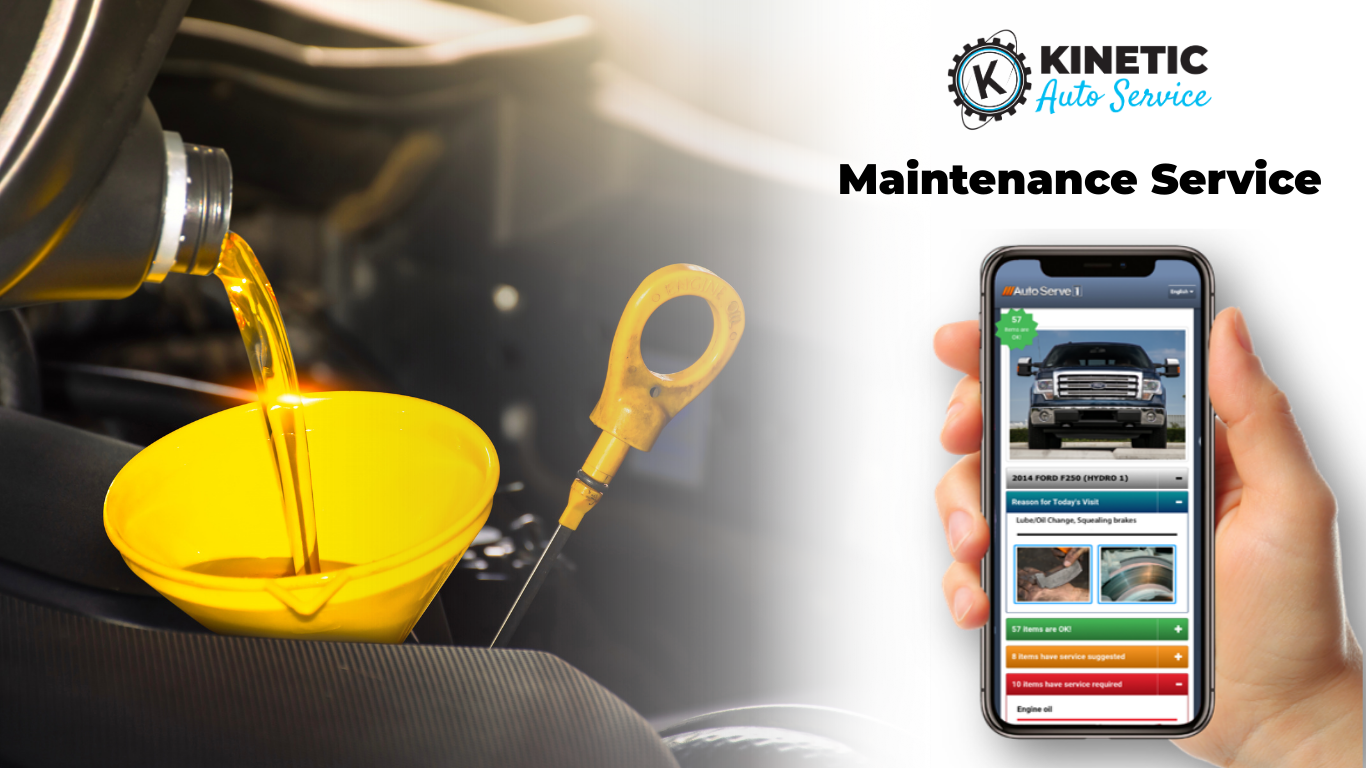
Our digital vehicle inspections use photos and videos to show you what our technicians find. We'll explain which concerns are urgent, which maintenance is recommended and which repairs can reasonably be planned for later. That way, you can prioritize your vehicle's needs and budget accordingly.
The best way to avoid an unexpected breakdown is to address the warning signs you've already been given.
Keep Your Vehicle Reliable This Winter
If your vehicle has developed an unusual noise, a fluid leak, a steering or suspension concern, or you're unsure whether its maintenance is up to date, Kinetic Auto Service can help.
Our team provides professional diagnostics, repairs and preventative maintenance in Regina. Let us help you understand what your vehicle needs before winter turns a small concern into a bigger problem.
Give us a call or
book an appointment online to ensure your vehicle is ready for winter!