Written by: Erin Vaughan - President, CEO and Journeyperson Automotive Service Technician
Want to Save Money on Car Repairs?
Start Here First
When something goes wrong with your vehicle, it's tempting to start with the most obvious solution: replace the part that SEEMS to be causing the problem.
Sometimes the obvious part is the root cause of the problem, but after years of diagnosing vehicles, I've seen a lot of money spent replacing perfectly good parts because nobody stopped to determine why the problem was happening in the first place. If you don't know what's causing a problem, one of the best ways to potentially save money is simple:
Diagnose first. Repair second!
The Part Mentioned in the Code Isn't Necessarily Bad
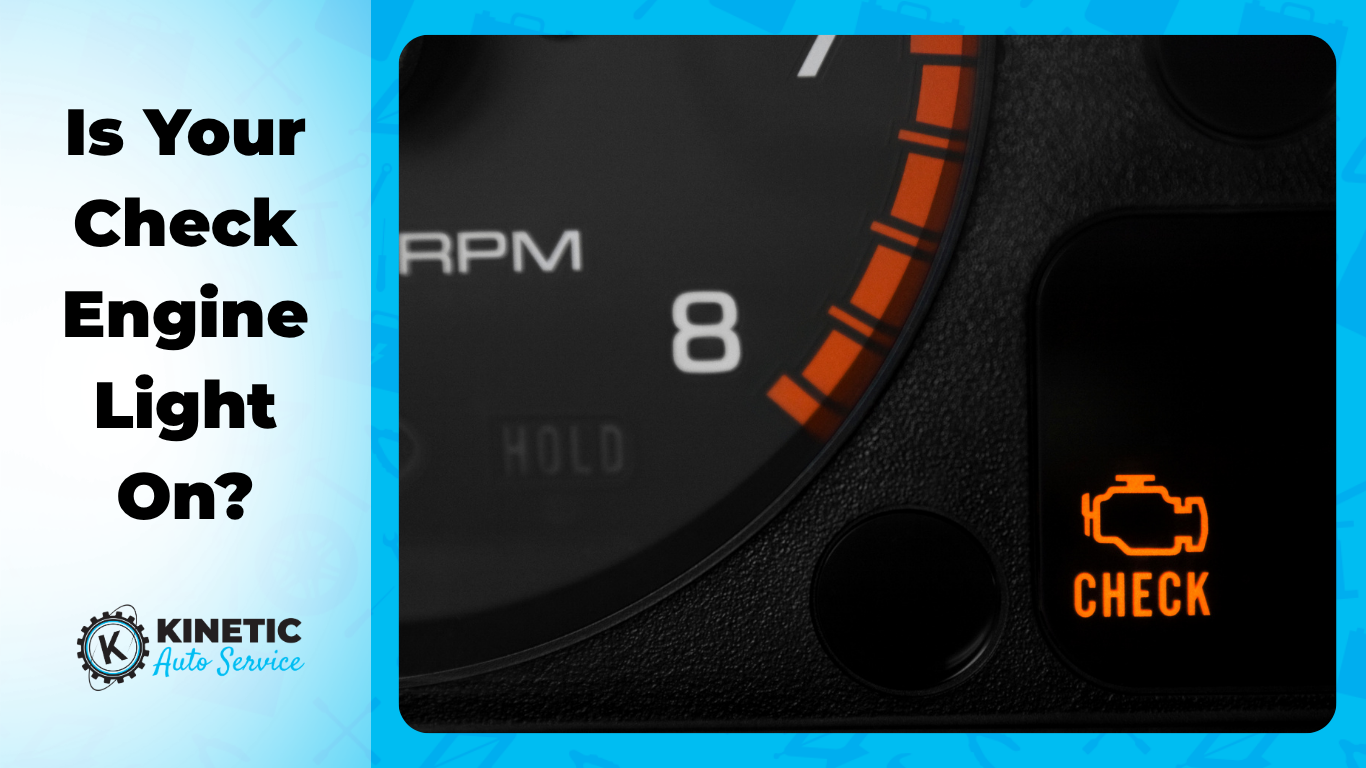
This happens all the time with check engine lights.A vehicle has a trouble code related to an oxygen sensor.
It's easy to conclude: Oxygen sensor code = bad oxygen sensor, right??!!
Except the oxygen sensor may be working perfectly and it's reporting a problem caused by:
- A fuel injector that isn't functioning properly
- Spark plugs that aren't firing properly
- A hole in the exhaust near the oxygen sensor
- A wiring or electrical problem
- Another condition affecting what the sensor is measuring
Replacing the oxygen sensor doesn't repair any of those problems, you've paid for a new sensor and you still need to find out what's actually wrong.
Sometimes a $4,000 Problem Is a Broken Wire
One of the best examples we can give came from a vehicle with a four-wheel-drive system that wasn't working.
Before coming to us, the owner had already spent approximately $4,000 replacing a transfer case module and the 4X4 actuator - the four-wheel drive still didn't work.
Instead of replacing another component, he decided to have us diagnose the problem. We reviewed the vehicle's wiring diagram to understand how the four-wheel-drive control circuit was supposed to operate, then we tested the power and ground signals at the actuator connector.
There was no power! So we traced the wiring and about eight inches from the connector, we found the problem: a broken wire! The expensive components weren't the root cause, the circuit couldn't deliver power to them.
That's the difference between asking “Which part should we replace?” and “Why isn't this system working?”
The Same Thing Happens With Mechanical Problems
Diagnosis isn't only about electronics and check engine lights!
Suppose your vehicle pulls to one side while you're driving, you might assume it needs a wheel alignment.
But a pull is more likely caused by something such as:
- A bad or low tire
- A worn suspension component
- A brake problem
- Another mechanical issue
An alignment won't fix those problems, you could pay for the alignment and drive away with exactly the same symptom.
Even Seeing a Worn Out Part Doesn't Always Give You the Answer
Sometimes a problem is obvious - you can look at a component and see that it's worn out or broken, but that doesn't necessarily tell you why it failed.
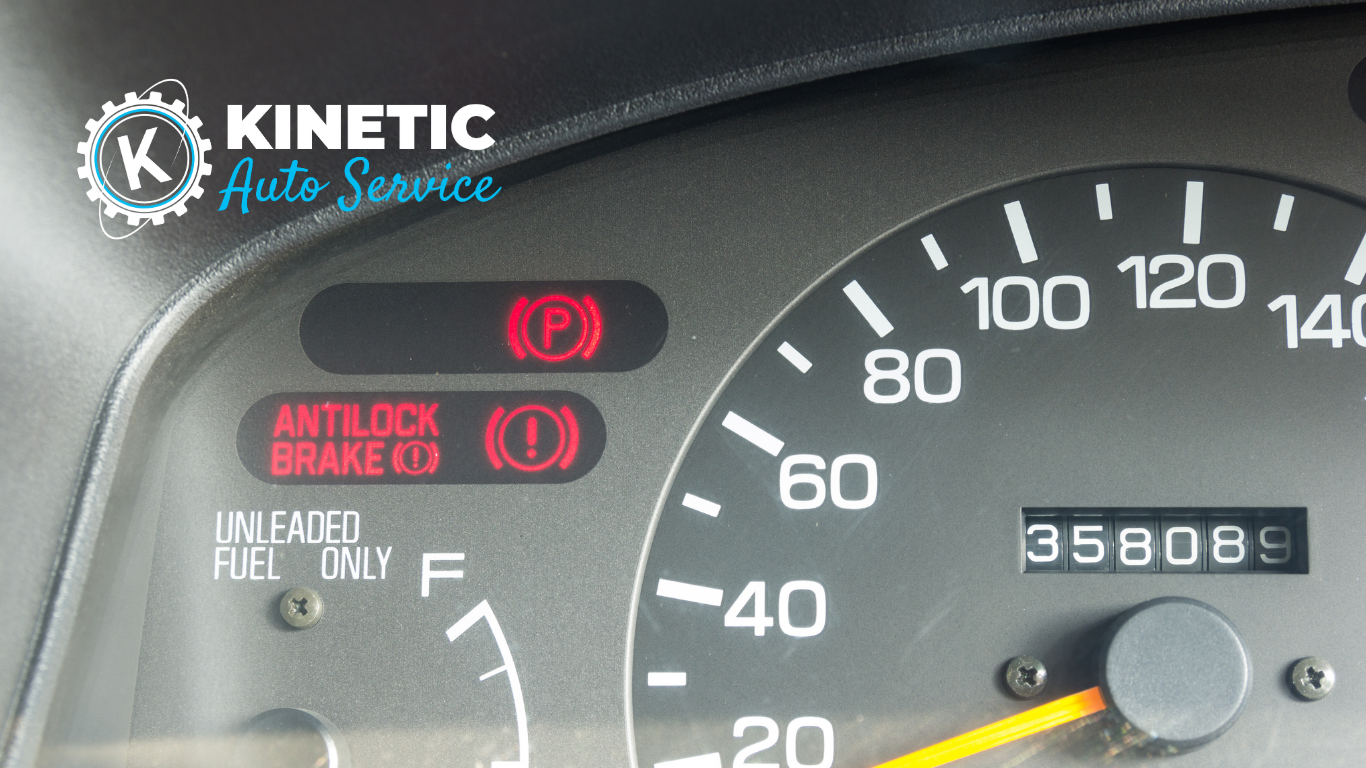
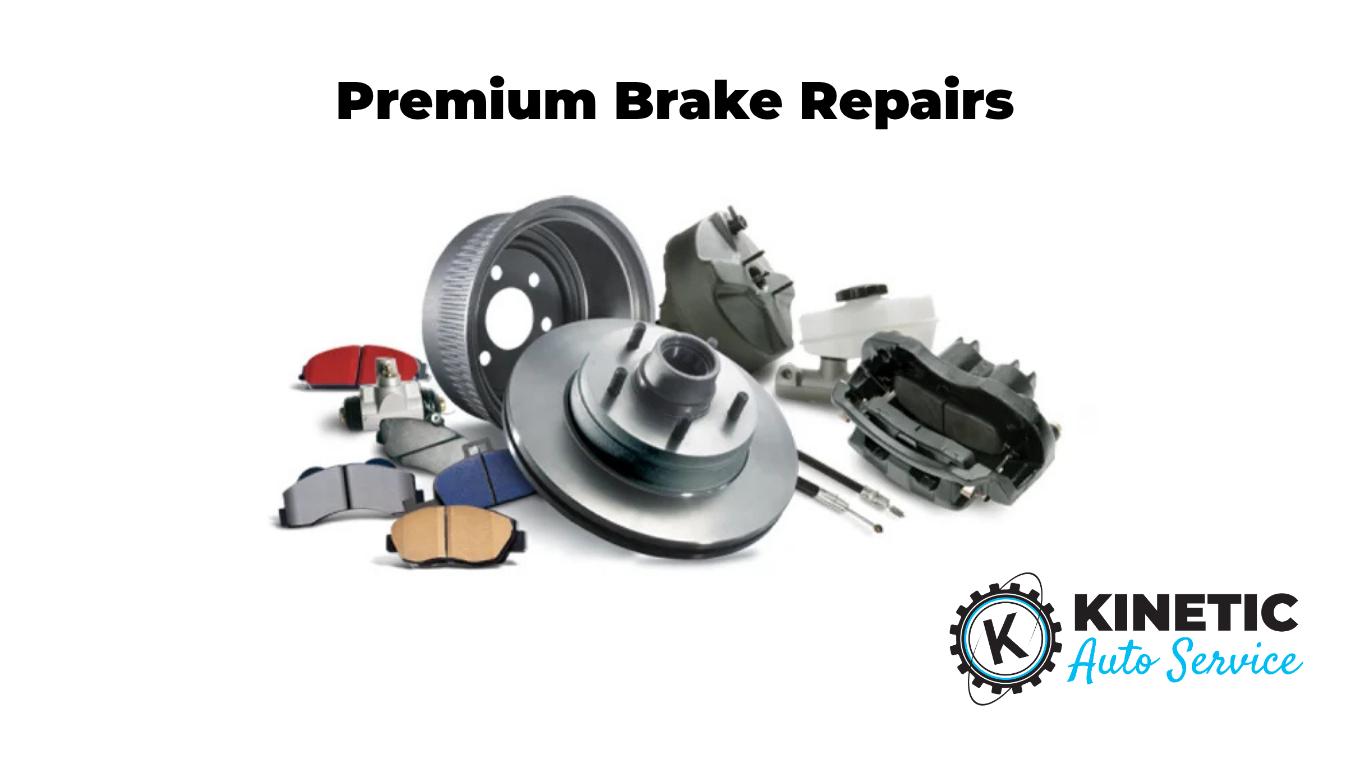
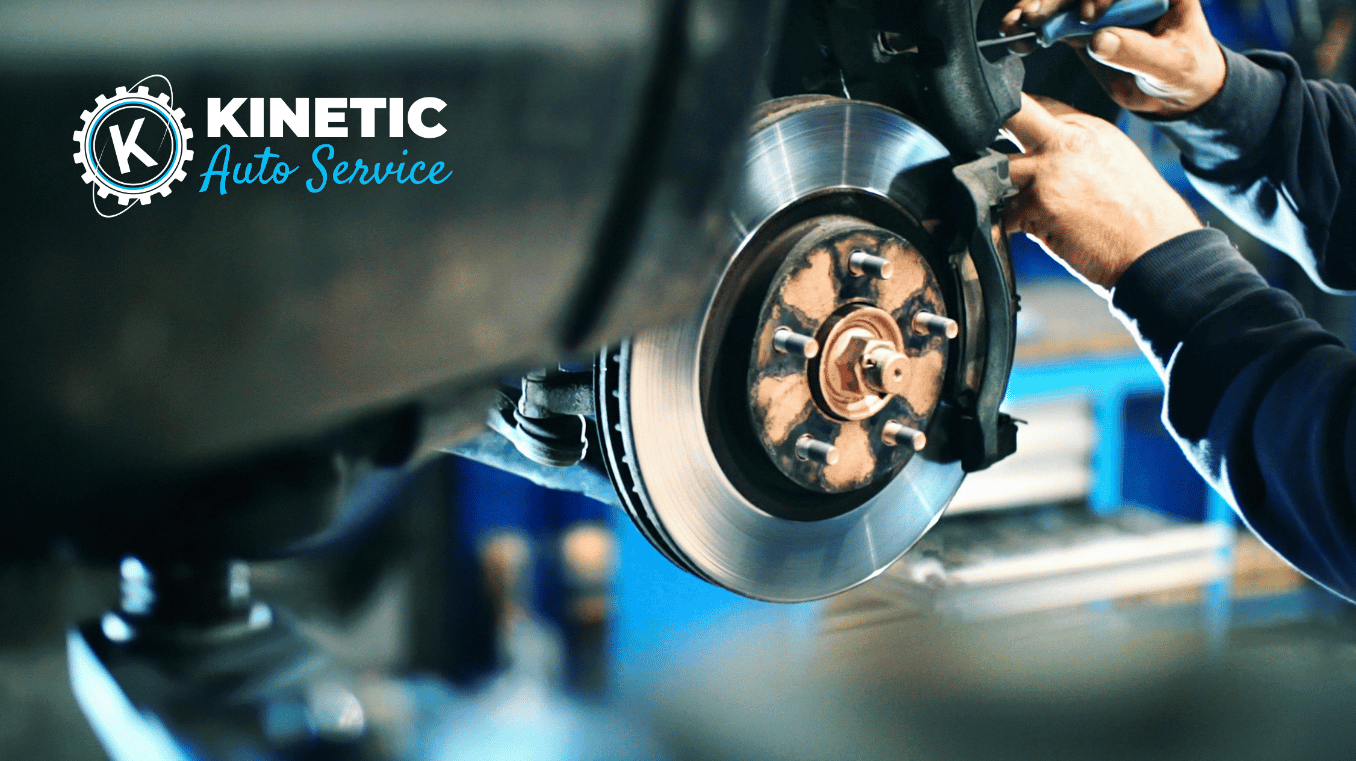
Consider worn brake pads. Yes, the brake pads may need replacement.
But what if they wore prematurely because:
- A brake hose is restricted
- A caliper is seized
- The parking brake cable is stuck
- The caliper slide pins are seized
Replacing the brake pads addresses the worn component but finding and correcting the underlying problem helps prevent the new brake pads from suffering the same fate.
Broken Wires Can Look Like Failed Components
Modern vehicles rely on an extensive amount of electrical circuits to operate an enormous number of components. An actuator, sensor or module may appear to have stopped working, but the component can't work if it isn't receiving the power, ground or reference signal it needs. That's why electrical diagnosis often involves understanding how the circuit is designed to work and then testing it.
The goal isn't to find a part that might be bad, it's to gather enough evidence to determine what actually failed.
What Happens When You Call Kinetic With a Vehicle Problem?
Clients sometimes call and say: “I think I need a ______.”
Our first step is usually to ask questions.
- What is the vehicle actually doing?
- When does it happen?
- Does temperature affect it?
- Does it happen after a long drive?
- After getting fuel?
- While braking?
- While accelerating?
- While turning?
- When driving over certain types of bumps?
- Under particular road conditions?
Those details can completely change where we start. Based on your answers, we can recommend the appropriate assessment or diagnostic process.
It’s not that we don’t BELIEVE you, it’s that we want to provide you with a correct repair. We don’t want to just replace a part, take your money and have you experience the same issue.
When Don't You Need Diagnosis?
Not every visit requires diagnostic testing, routine maintenance is an obvious example. If your engine oil is due to be changed, you don't need us to diagnose why. There are also simple components an informed vehicle owner can sometimes identify themselves, such as a worn wiper blade or dirty air filter.
However, even something as apparently simple as a headlight that doesn't work isn't automatically a bad bulb these days.
The problem could be:
- The bulb
- A fuse
- A damaged socket
- A broken wire
- A control module
- Another electrical fault
The important question is whether you actually know the root cause of the problem. If you do, repair it! If you don't, that's when diagnosis becomes valuable.
Good Diagnosis Isn't an Extra Repair
It's understandable to look at diagnostic time as an additional expense, but when the cause of a problem isn't known, diagnosis is how we determine which repair is actually needed. Replacing the wrong component can mean paying for parts and labour without solving the original problem, and then you still need a diagnosis.
That's why, when there's uncertainty about what's causing a vehicle problem, our approach at Kinetic Auto Service is straightforward: start with the problem, test to find the cause of the problem THEN repair what's actually broken. This process saves you time, money and stress!